


UK players who want to get a handle on the quick, volatile gameplay of cash or crash live offers or Crash Live often find that a measure of structured learning makes a difference. Training modules for this live game show don’t involve handing you a magic formula for winning—no honest guide would ever do that. Instead, they’re about providing you a solid grasp of how the game functions and how to approach it. The idea is to transition from just viewing the rocket fly to engaging with a sense of direction. You absorb the rules, get a feel for the risks, and decide how to select options that fit your preferences, all while maintaining the basics of responsible play as a priority. This article walks through what good training for Cash or Crash Live should encompass, especially for players in the UK.
Where to Find Quality Training Resources
UK players in need of proper guidance possess a few options. Credible casino review sites and independent strategy blogs frequently publish detailed guides and video walkthroughs for Cash or Crash Live. The original game maker, Evolution, gives clear rules and demos too. But you have to choose your sources carefully. Avoid anything that claims ‘guaranteed wins’ or a ‘secret system’. That’s a certain sign of bad advice. The most reliable resources concentrate on education, probability, and bankroll management. You could also learn from other players by reading community forums centered on live casino games. Just remember to take any anecdotal tips with a grain of salt, and always view them through the lens of safe play and the reality of random chance.
Understanding the Fundamental Mechanics of Cash or Crash Live
You need to learn the basics first. Understanding the basic machinery of Cash or Crash Live is the vital first step. A live host runs the game, where a rocket ship ascends through a series of multipliers. You put your bet before it launches. As it flies, you are presented with a choice: hit ‘cash out’ to claim the current multiplier, or let it ride for a bigger potential payoff. The catch is that a crash point is determined at random at the start of each round. If the rocket explodes before you cash out, you give up your bet. Good training material will unpack the screen layout, clarify the random number generator behind the crash, and describe what the host actually does. One key takeaway is that the crash multiplier is already decided as soon as the round kicks off. This fact alone clears up a lot of uncertainty about trying to outguess the game in real time.
The Function of the Live Presenter and Game Interface
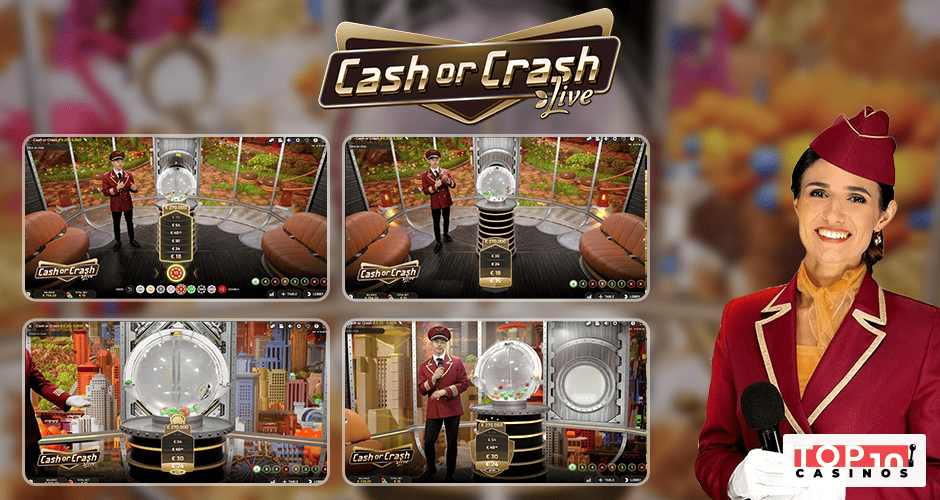
The presenter is there to entertain, sure, but they also direct the game. Training helps you identify their cues and keep up with the rhythm of a round. Everything on screen gives you information: the climbing multiplier, the cash-out button, the list of past rounds. A big part of learning the game is getting so familiar with this layout that you don’t have to think about it. When you’re at ease with the environment, you can concentrate your brainpower on the key decision of when to cash out, instead of fumbling for buttons while the rocket zooms upward.
Leveraging Demo Play and Simulation Tools
Reading about strategy is one thing. Putting it into practice is another, and the best place to start is with free demo modes. Numerous UK casinos that offer Cash or Crash Live have a ‘play for fun’ option using fake credits. Any worthwhile training will tell you to camp out in this mode for a while. It’s your risk-free lab. You can experiment with different cash-out tactics, become familiar with managing a virtual bankroll, and grasp the game’s tempo without spending a penny. You’re welcome to mess up and learn from it. A solid guide will point you to these demos and offer you specific drills. It might ask you to play a session using a strict 2% bet rule, or to practise a three-stage partial cash-out plan over twenty demo rounds.
Advanced Tactical Concepts and Trend Identification

Each spin is individual, but gamblers can still watch broad tendencies to assist in shaping their choices. It’s not prediction. It focuses on watching the game’s progression and managing your personal responses. For example, post a few spins where the rocket crashed at minimal multipliers, many players could opt to adopt a cautious strategy, believing a higher multiplier could be due (although that’s not guaranteed). In-depth study might look at the mental game at the table. It helps you spot when you are inclined to chase a loss, or when you experience a twinge of FOMO as the multiplier skyrockets beyond your typical withdrawal level. The objective is to build a disciplined approach that avoids typical psychological pitfalls, which are usually the surest way to a depleted bankroll.
- Historical Data as Context, Not Prediction: The round history reveals the game’s variance, as opposed to what future rounds hold.
- Implement a Partial Withdrawal Strategy: Securing gains at small multipliers reduces your overall risk.
- Recognize Momentum Triggers: Become skilled at recognizing when you act impulsively instead of your predetermined strategy.
Focusing on Safe Play in Your Strategy
Authentic training for this game is built on responsible gambling foundations. This isn’t a side note. It’s the core. A good module describes the practical tools every UK player has access to, like deposit limits, time-out functions, and the GAMSTOP self-exclusion program. It demonstrates that playing responsibly is in fact a strategic edge. A calm head that isn’t stressed about money will lead to more intelligent decisions. The training should highlight that gambling is a form of entertainment you pay for, not a job. It also needs to cover the red flags of trouble: trying to win back losses, being untruthful about time or money spent, or playing when you’re distressed. Spotting these red flags is a vital skill for taking care of yourself, which is the best way to enjoy the game for the long haul.
- Utilise All Available Tools: Don’t merely mull over limits. Configure them in your casino account before you begin.
- Organise Your Sessions: Plan how long you’ll play and stick to it. Steer clear of playing when you’re exhausted or under pressure.
- Know the Red Flags: Be forthright with yourself if your behaviour is changing, and step away or use a time-out right away.
Creating a Groundwork with Money Management
If you only pay attention to one part of training, make it fund management. This is the foundation of playing any unpredictable game sensibly, and Cash or Crash Live undoubtedly fits that bill. No ingenious method will protect you from bad money habits. A proper module on this topic addresses setting a strict loss limit before you log in, determining a budget for your play, and sizing your bets appropriately. The golden rule is to hold bets sufficiently low that a run of bad luck won’t wreck your finances or push you into trying to recoup losses. Many players apply the percentage method, where you always limit your risk to a minor fraction of your session fund on a single round. This approach acknowledges the game’s natural variance and enables you to come back another time, regarding it as a funded pastime rather than a monetary risk.
- Set Absolute Limits: Establish the highest amount you’re ready to lose in one go, and do not exceed that boundary.
- Use the Percentage Rule: Restrict your bet to between 1% and 5% of your session bankroll to smooth out the ups and downs.
- Separate Winnings: When you achieve a good win, make a point of putting some of it aside so it doesn’t get reinvested into the game.
Assessing Risk: The Cash-Out Decision Matrix
Everything in Cash or Crash Live culminates in that one moment: cash out or let it ride. Preparation transforms this from a pure guess into a considered choice. You start to weigh risk against reward at different multiplier levels. Cashing out at a low multiplier like 1.2x is very likely to succeed, but the payout is small. Holding out for 5.0x presents a much bigger prize, but the chance of crashing before you get there is far higher. Players learn about ‘expected value’ over many rounds, while also remembering that each launch is its own isolated event. Training often recommends setting up a personal ‘cash-out ladder’. This means deciding in advance to pull out parts of your bet at different multiplier targets. It’s a way to bank some profit early while still having a stake in the game for a later, bigger score.